I turn complexity into conviction for infrastructure at the frontier.
Transactions no one else can see. Security that other networks borrow. A chain where agents run themselves. A layer that decides what an agent can do.
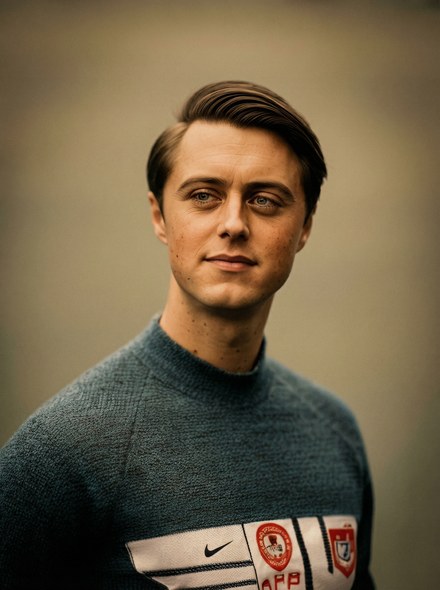
Five years building autonomous AI and cryptographic trust: private transactions, the chain agents run on, the security other networks borrow, the governance layer that decides what an agent can and can't do. Nine years of brand, community, and change work before that.
- Sweet spot
- Narrative and go-to-market for infrastructure that does not have a story yet. Five years across autonomous AI and cryptographic trust: marketing for an AI-native L1 at Ritual, community for restaking at EigenLayer, go-to-market for agent governance at Inversed, research at a privacy venture studio. Audiences built from zero, contributor economies designed and run, and the primitive explained to developers, capital, and the wider world.
- Open to
- A scoped narrative / go-to-market project or role with a protocol, subnet, foundation, or fund.
Four highly technical projects, made legible.
 InversedGTM Lead
The applied cryptography lab that built the privacy layer behind World ID at scale. I built the go-to-market and positioning for Threshold, a governance layer that enforces what an AI agent may do before it acts. Wireframed the product from user research (wireframes, demo), mapped the competitive landscape (Threshold Atlas), and authored The Agentic Stack and The Organizational Stack.
InversedGTM Lead
The applied cryptography lab that built the privacy layer behind World ID at scale. I built the go-to-market and positioning for Threshold, a governance layer that enforces what an AI agent may do before it acts. Wireframed the product from user research (wireframes, demo), mapped the competitive landscape (Threshold Atlas), and authored The Agentic Stack and The Organizational Stack.
 RitualHead of Marketing
The chain built for autonomous agents: everything AI needs onchain, as native primitives rather than middleware, oracles, or keeper bots. Sixteen precompiles give Solidity contracts frontier models, internet access, scheduling, and key management, with prompts and responses encrypted inside TEEs and results settled in the same transaction (docs). Agents run themselves: they schedule their own execution, hold their own keys, and revive from checkpoints, so as long as they have funds they keep operating. I led marketing for that design before there was a testnet to demo. Foundation account from zero to 40,000+. Combined audience past 100,000. Community from 25,000 to 100,000+. Roughly 500 developers in a technical chat community. One of the first agent-driven experiences deployed inside a live community. Three threads I wrote for the foundation account: Intelligent Money, EVM++, and the World Computer.
RitualHead of Marketing
The chain built for autonomous agents: everything AI needs onchain, as native primitives rather than middleware, oracles, or keeper bots. Sixteen precompiles give Solidity contracts frontier models, internet access, scheduling, and key management, with prompts and responses encrypted inside TEEs and results settled in the same transaction (docs). Agents run themselves: they schedule their own execution, hold their own keys, and revive from checkpoints, so as long as they have funds they keep operating. I led marketing for that design before there was a testnet to demo. Foundation account from zero to 40,000+. Combined audience past 100,000. Community from 25,000 to 100,000+. Roughly 500 developers in a technical chat community. One of the first agent-driven experiences deployed inside a live community. Three threads I wrote for the foundation account: Intelligent Money, EVM++, and the World Computer.
 EigenLayerHead of Community
Restaking was one of the most influential architectural ideas in crypto in 2023 to 2024, and the closest cousin to an incentive network I have worked on: independent operators, scored, paid by result. I built the community function from scratch as the category was being defined. Workstreams for analytics, growth, support, and programs. Designed and led a retroactive distribution of six million EIGEN to early advocates and contributors, the community allocation of the Season 2 stakedrop. Both stakedrop launches and the token generation event. Co-designed the first version of the ambassador program and the fellowship. Unlocking Human Coordination, a documentary on the protocol's ethos, which I co-directed and executive produced.
EigenLayerHead of Community
Restaking was one of the most influential architectural ideas in crypto in 2023 to 2024, and the closest cousin to an incentive network I have worked on: independent operators, scored, paid by result. I built the community function from scratch as the category was being defined. Workstreams for analytics, growth, support, and programs. Designed and led a retroactive distribution of six million EIGEN to early advocates and contributors, the community allocation of the Season 2 stakedrop. Both stakedrop launches and the token generation event. Co-designed the first version of the ambassador program and the fellowship. Unlocking Human Coordination, a documentary on the protocol's ethos, which I co-directed and executive produced.
 DecentHead of Research
A privacy-focused venture studio. Led the research practice through the bear market, built the stage-gated lifecycle that decided what got funded, and took a privacy product for trading desks through validation with three of them before more capital moved. Brand strategy and organization design for the studio.
DecentHead of Research
A privacy-focused venture studio. Led the research practice through the bear market, built the stage-gated lifecycle that decided what got funded, and took a privacy product for trading desks through validation with three of them before more capital moved. Brand strategy and organization design for the studio.
The work.
| Type | Piece | Signal | When |
|---|---|---|---|
 SiteBittensor SiteBittensor |
IOTA, from the outsideFour pages on IOTA, subnet 9, from the public record: the Orion runs, the field around it, where its numbers travelled, and the team's four papers explained. | 4 pages | Sep 2026 |
| MapBittensor |
Exploit Montreal MappedExploit Summit 2026, mapped by what each organization does. | 58 orgs | Sep 2026 |
| IndexBittensor |
Subnet Legibility IndexThe top 32 subnets, scored on whether a newcomer can understand them. | 32 subnets | Sep 2026 |
 Company brainCompression Company brainCompression |
CoreThe company brain Compression runs on: one git repository that agents read, act on, and write back to. | 2026 | |
| ProductInversed |
Threshold, wireframed and demoedBuilt from user research before the product existed: wireframes, interactive demo. | 2026 | |
| Competitive mapInversed |
Threshold AtlasThe agent-governance vendor landscape, layer by layer, searchable by regulation. | 8 layers | 2026 |
| White paperInversed |
The Organizational StackHow organizations become agent systems. The companion to the Agentic Stack. | Mar 2026 | |
| White paperInversed |
The Agentic StackNine layers of autonomous agent systems, infrastructure to governance. Interactive. | Mar 2026 | |
| ThreadRitual Foundation |
The World ComputerThe precompile that gives Solidity a browser. Internet access, explained as one new capability. | 24K views | Dec 2025 |
| ThreadRitual Foundation |
Intelligent MoneySmart contracts are deterministic, not smart. Why a chain that can call a model changes what a contract is. | 74K views | Dec 2025 |
| ThreadRitual Foundation |
EVM++Execution sidecars as a base-layer primitive. The same argument, told to developers. | 32K views | Dec 2025 |
| FilmEigenLayer |
Unlocking Human CoordinationFrom Bitcoin to Ethereum to open innovation. Documentary on the protocol's ethos, 6:02. Co-director and executive producer. | 38.7K views | Oct 2024 |
| DistributionEigenLayer |
Season 2 stakedrop, community allocationEarly advocates and contributors, 77 GitHub repositories recognized. I designed and led it. | ~6M EIGEN | Sep 2024 |
 FilmsProtocol Labs FilmsProtocol Labs |
Building Web3 ShowcaseThree films: Starling Lab, Audius, Textile. Executive producer. | 3 films | 2020 |
I give voice to complex technologies as a player/coach.
The technology arrives before it has a narrative and metaphors to make it legible to a broader audience. I build those stories brick by brick.
Player/coach means I am in the work, not above it. I set the themes, then write, edit, and give notes alongside the team. The teams I have built, a community function from scratch, a marketing function pre-product, a brand team through hypergrowth, ran on shared purpose and high autonomy.